
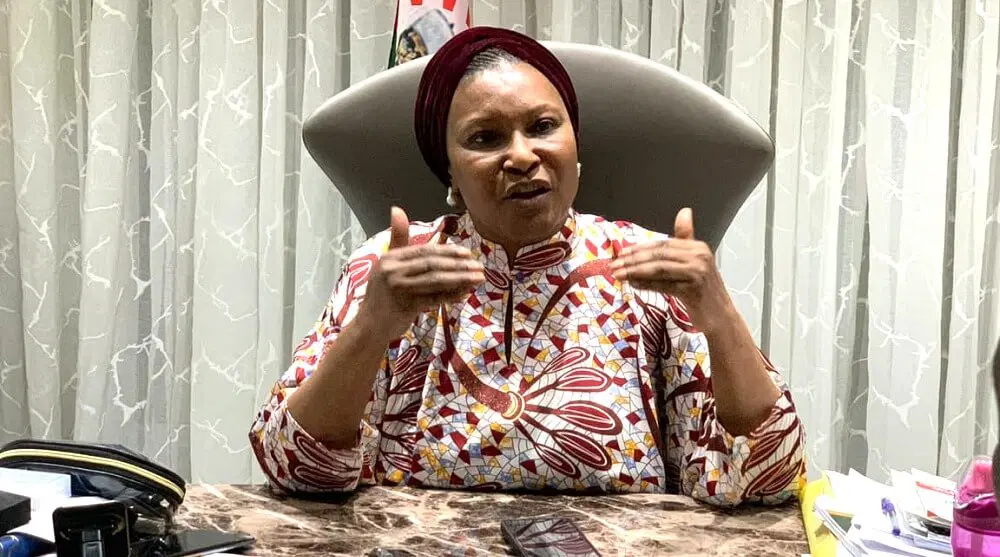
Senator Ireti Kingibe, who represents the Federal Capital Territory (FCT) in the Senate, has clarified that she did not approve the Senate committee report that recommended disciplinary measures against Senator Natasha Akpoti-Uduaghan.
Speaking during an interview on Arise Television, Kingibe explained that although she attended a meeting of the Senate Committee on Ethics, Privileges and Public Petitions, she was not present when the report was finalized and therefore could not have endorsed its contents.
Kingibe Questions Appearance of Her Signature
According to the senator, she attended the committee session briefly before leaving to participate in a tax reform retreat, which she considered more important for addressing issues affecting her constituents in the FCT.
Kingibe stated that she never reviewed the committee's final report before it was submitted. She expressed surprise when she later discovered that a photocopy of her signature appeared on the document.
"I could not have endorsed the report because I never saw the final version," she explained.
The senator noted that she subsequently raised concerns with senior members of the Senate leadership, including the Deputy Senate President, regarding her inability to access the report before its submission.
While stressing that she was not accusing anyone of forgery, Kingibe maintained that lawmakers should always have sufficient opportunity to examine committee reports before their signatures are attached to official documents.
Calls for Greater Transparency in Senate Procedures
Kingibe criticized what she described as a culture where committee reports may be signed without thorough review, arguing that such practices weaken transparency and accountability within the legislature.
She emphasized the need for reforms that would ensure senators fully understand and approve reports before they become official Senate documents.
According to her, stronger procedural safeguards would help improve public trust in legislative processes and reinforce democratic accountability.
Natasha Akpoti-Uduaghan Matter Could Have Been Resolved Earlier
The FCT senator also suggested that the controversy surrounding Senator Natasha Akpoti-Uduaghan could have been handled differently.
Kingibe observed that similar disputes involving lawmakers in the past were often resolved through apologies and internal reconciliation rather than prolonged disciplinary actions.
She explained that senators who violate parliamentary procedures traditionally acknowledge their mistakes and apologize to their colleagues, bringing such matters to a swift conclusion.
In her view, the dispute involving Akpoti-Uduaghan lasted longer than necessary and could have been resolved much earlier through dialogue and compromise.
Senate Acting More as Executive Partner, Says Kingibe
Beyond the suspension controversy, Kingibe raised broader concerns about the relationship between the National Assembly and the Executive arm of government.
She argued that the legislature has increasingly operated as a "cooperating arm" of the Executive rather than functioning as an independent institution responsible for oversight and accountability.
According to her, many policies and decisions often attributed solely to the Presidency receive support from lawmakers and therefore reflect the collective responsibility of both branches of government.
Kingibe stated that the Senate should play a stronger constitutional role in scrutinizing executive actions and ensuring that democratic checks and balances remain effective.
Growing Debate Over Legislative Independence
The senator's remarks come at a time when discussions about the independence of Nigeria's legislature continue to attract national attention.
Political observers and civil society groups have repeatedly called for stronger oversight mechanisms and greater institutional independence to ensure that the National Assembly effectively performs its constitutional responsibilities.
As debates continue, Kingibe's comments are expected to contribute to ongoing conversations about transparency, accountability, and the future of legislative governance in Nigeria.



0 Comments